

The Student Loan Credit Crisis
How government errors are dragging down credit scores across the country
The federal student loan system has long been riddled with errors. But since the government resumed collections on defaulted loans without ensuring the accuracy of loan information, these errors have compounded into a persistent, large-scale problem—with serious consequences for borrowers’ credit profiles and reports.
Millions of people are struggling with false, misleading, or outdated credit reporting tied to their federal student loans. Thanks to systemic failures by the Department of Education and its loan servicers, loan data like outstanding balance, payment amount, and delinquency status are routinely misreported to credit agencies. Some borrowers see their balances misreported with higher totals than they owe, while others find loans that have already been paid off, forgiven, or discharged are still reported as active.
New Case: Woods v. U.S. Department of Education
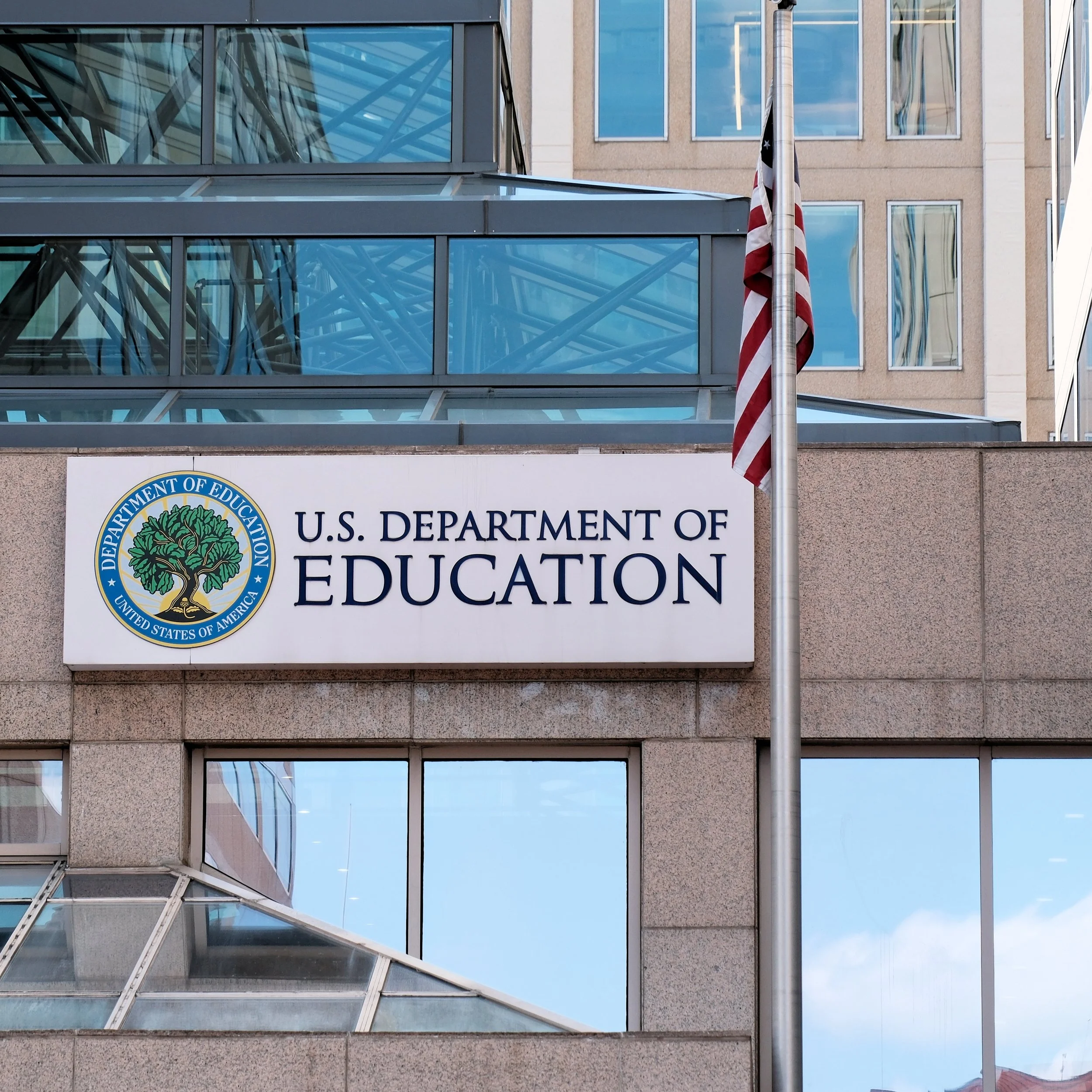
On September 24, 2026, borrowers filed a proposed class action lawsuit against the U.S. Department of Education for continuing to report federal student loans as active, years after the Department cancelled the loans. The lawsuit, filed in the U.S. District Court for the District of Columbia, seeks damages under the Fair Credit Reporting Act.
The Department’s inaccurate reporting can raise borrowers’ cost of borrowing, limit access to credit and housing, and otherwise hold them back financially.
The Result of Inaccurate Reporting
Credit profiles are being weakened through no fault of the borrower due to rampant errors on credit reports—making it harder to rent an apartment, finance a car, or even get a job or healthcare. Even one inaccurate detail can damage a credit profile for years. That can mean:
A family turned away or unfairly charged more for housing.
A worker denied a job opportunity.
A patient turned away from healthcare or charged more for insurance.
A borrower forced to pay higher interest or fees on everyday credit.
Trapped in a Broken System
Once an error lands on their credit reports, borrowers have no real way to fight back. The dispute process is supposed to fix mistakes—but in reality, it rarely works. Borrowers spend months navigating a maze of servicers and credit reporting agencies, only to see errors remain.
Low-income students and students of color—who are more likely to borrow, hold higher balances than their peers, and are less likely to have built other forms of credit—are especially vulnerable. These errors reinforce inequity and deepen the wealth gap.

The Real-World Impact of Inaccurate Debt
Inaccurate debt on a credit report can affect more than a credit score. It can also increase a borrower's debt-to-income ratio (DTI), a key factor lenders use to determine whether someone qualifies for a mortgage.
PPSL analyzed national income, debt and mortgage data to examine how additional monthly debt affects borrowers’ debt-to-income ratios — and what that can mean for access to a mortgage.
The analysis shows that even a few hundred dollars in additional monthly debt can have significant consequences.
Income Needed to Maintain Debt-to-Income Ratio (DTI) with Additional Monthly Debt*
An additional $100 in monthly debt can require thousands of dollars in additional annual income just to maintain the same debt-to-income ratio.
Table 1: Median Household Income (MHI)† and Median DTI Ratio‡ nationwide
| Additional Monthly Debt (ΔD) |
Additional Annual Income Needed |
New Required Annual Income |
% Increase Over Existing Income |
|---|---|---|---|
| $100 | $8,955.22 | $92,685.22 | 10.70% |
| $200 | $17,910.45 | $101,640.45 | 21.39% |
| $300 | $26,865.67 | $110,595.67 | 32.09% |
| $400 | $35,820.90 | $119,550.90 | 42.78% |
| $500 | $44,776.12 | $128,506.12 | 53.48% |
| $600 | $53,731.34 | $137,461.34 | 64.17% |
| $700 | $62,686.57 | $146,416.57 | 74.87% |
| $800 | $71,641.79 | $155,371.79 | 85.56% |
| $900 | $80,597.01 | $164,327.01 | 96.26% |
| $1,000 | $89,552.24 | $173,282.24 | 106.95% |
NOTE: "Income" for both MHI and DTI represents gross income. Implied annual debt payment for median household/median DTI profile is $11,220, or $935 per month.
Table 2: Median Household Income (MHI)§ and Median DTI Ratio** of approved applicants for a home mortgage, 2025
| Additional Monthly Debt (ΔD) |
Additional Annual Income Needed |
New Required Annual Income |
% Increase Over Existing Income |
|---|---|---|---|
| $100 | $3,000.00 | $119,000.00 | 2.59% |
| $200 | $6,000.00 | $122,000.00 | 5.17% |
| $300 | $9,000.00 | $125,000.00 | 7.76% |
| $400 | $12,000.00 | $128,000.00 | 10.34% |
| $500 | $15,000.00 | $131,000.00 | 12.93% |
| $600 | $18,000.00 | $134,000.00 | 15.52% |
| $700 | $21,000.00 | $137,000.00 | 18.10% |
| $800 | $24,000.00 | $140,000.00 | 20.69% |
| $900 | $27,000.00 | $143,000.00 | 23.28% |
| $1,000 | $30,000.00 | $146,000.00 | 25.86% |
NOTE: "Income" for both MHI and DTI represents gross income. Implied annual debt payment for median income/median DTI profile is $46,000, or $3,833.33 per month.
Among successful home-purchase mortgage applicants in 2025, the median household income was $116,000, and the median DTI was 40%. At that DTI, an additional $100 in monthly debt would require $3,000 in additional annual income to offset. An additional $500 would require $15,000 more in annual income.
Debt Reduction and Mortgage Denial Outcomes: DTI Thresholds, 2025
For people denied a mortgage because of their DTI, a few hundred dollars in reported monthly debt can be the difference between falling above or below a key lending threshold.
Of applicants denied a home-purchase mortgage principally because of their DTI, reducing monthly debt by $200 would have brought more than 25,000 to or below the 50% DTI threshold. A $500 reduction would have brought more than 100,000 to or below that threshold.
Figure 1: Share of Applicants Denied a Mortgage in 2025 Moved Below DTI Threshold* by Amount of Monthly Debt Reduction,† with Implied Corresponding Federal Student Loan Balance‡
What this can mean for student loan borrowers
For federal student loans in forbearance with a $0 payment reported, Fannie Mae underwriting standards can require lenders to calculate a monthly payment equal to 1% of the outstanding loan balance. That means a $50,000 student loan balance can translate into $500 in monthly debt when calculating DTI.
For borrowers whose cancelled student loans are still incorrectly reported as outstanding, debt they no longer owe can therefore continue to affect how lenders assess their finances.

Mandy W. from California
“When I was told my loans would be discharged, I was so relieved. I thought I could finally put this behind me. Instead, I’ve been jumping through hoops, getting different answers depending on who I talk to, and watching a debt I was told I no longer owe keep growing on my credit report. I’ve done everything they asked me to do, and I’m still stuck in limbo. The Department said these loans would be cancelled. It needs to follow through and make that real.”
Mandy Woods is the lead plaintiff in Woods v. U.S. Department of Education
Jorge C. from Oregon
"When the Department of Education told me these loans were discharged, I thought I could finally put them behind me and start rebuilding my life, but my credit report tells a different story. Years ago, I trusted ITT’s promises and was lied to. Then I trusted the government when it said my loans were cancelled because of ITT’s fraud, and now I feel like I’ve been lied to all over again. I know there are so many others in this position who feel scared and don’t know what rights they have. I’m part of this lawsuit to bring this problem to light and fight for all of us.”
- Jorge Cortes is a plaintiff in Woods v. U.S. Department of Education
Our Commitment
The Project on Predatory Student Lending has been fighting for student borrowers for more than a decade. Now we are leading a national campaign to expose the Student Loan Credit Crisis and demand accountability from the government and its contractors.

“Borrowers are being punished for errors they didn’t cause and cannot fix. These systemic failures aren’t just technical glitches—they’re life-changing blows that block people from opportunity. Our clients deserve fairness, accountability, and a real chance to rebuild.”
- Eileen Connor, President & Director of the Project on Predatory Student LendingTake Action
Stay informed: Sign up for updates to receive the latest news on this fight.
Share your story: Have loan errors hurt your credit? Every voice helps shine a light on this crisis.